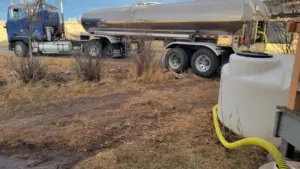

Dust on a construction site isn’t just a nuisance. It reduces visibility, coats equipment, and can create conditions that slow a project down. Dust control water delivery gives job sites a straightforward way to manage it — bulk, non-potable water applied where and when it’s needed, without depending on a site’s limited or nonexistent utility connections.
Why Dust Becomes a Job Site Problem
Dry conditions, heavy equipment traffic, and exposed soil all combine to kick up dust on an active construction site. Left unmanaged, that dust can:
- Reduce visibility on access roads and work areas
- Settle on equipment and materials
- Create an unpleasant or difficult working environment for crews
- Affect neighboring properties and public roads near the site
How Water Delivery Addresses It
Applying water to exposed soil, access roads, and material stockpiles is one of the most direct ways to keep dust down on an active site. The challenge is having enough water on hand to do it consistently, especially on sites without a connected water line. That’s where bulk, non-potable water delivery comes in — bringing the volume needed for dust suppression directly to the site, on a schedule that matches the project.
Building Dust Control Into a Project Schedule
- Assess site needs early — dusty conditions often show up quickly once ground is disturbed and equipment traffic picks up.
- Schedule recurring delivery if dust control is an ongoing need throughout the project, rather than a single application.
- Coordinate timing with the driest, busiest phases of work, when dust tends to be the biggest issue.
- Track usage so future deliveries can be planned around what the site actually requires.
Why Measured Delivery Helps With Planning
Construction projects run on budgets and schedules that don’t leave much room for uncertainty. High Plains H2O digitally meters every non-potable water load, so site managers know exactly how much water was delivered — no estimates, no guesswork. That accuracy makes it easier to plan dust control into a project’s water budget rather than treating it as an unpredictable cost.
Dust Control Beyond the Work Zone
Dust doesn’t stay contained to the exact spot where equipment is working. Wind and traffic can carry it onto neighboring properties and nearby public roads, which can create friction with neighbors or draw unwanted attention to a project. Proactive dust control — rather than reacting once complaints start coming in — helps keep a project on good terms with the surrounding area, in addition to protecting the crew and equipment working on site.
Coordinating Delivery With Site Conditions
Every job site is laid out differently, with its own access points, storage areas, and traffic patterns. Coordinating with a delivery provider on the best way to route water to the areas that need it most — access roads, stockpiles, or a specific work zone — makes dust control more effective than treating the whole site the same way. High Plains H2O works directly with site managers to figure out what schedule and approach fits a specific project.
Reliable Delivery for Active Job Sites
With over 37 years of trucking industry experience, High Plains H2O understands what it means to show up reliably for a job that’s on a schedule. Dust control isn’t something that can wait indefinitely, and dependable delivery timing helps keep a site running smoothly instead of losing time to conditions that could have been managed proactively.
Dust Control Across Different Project Types
Dust control needs look a little different depending on the type of project. Residential and commercial construction sites often need it most during grading and sitework phases. Agricultural and landscaping projects may need ongoing suppression across a larger footprint. Whatever the project type, the underlying need is the same — consistent access to enough non-potable water to keep dust from becoming a liability, without relying on a site’s own limited utility connections.
Why Consistency Beats a One-Time Application
A single application of water on a dusty site provides only temporary relief — dust returns quickly once soil dries back out, especially with continued equipment traffic. Sites that manage dust well tend to treat it as an ongoing task rather than a one-time fix, applying water on a recurring basis throughout the driest, busiest stretches of a project rather than reacting only when conditions get visibly bad. That consistency is exactly what a scheduled delivery relationship supports.
What to Communicate When You Call
Getting dust control delivery scheduled effectively starts with a clear picture of the site: roughly how large an area needs coverage, which phases of the project are expected to generate the most dust, and whether the need is ongoing or tied to a specific stretch of work. That information helps High Plains H2O set up a schedule that actually matches the project rather than a generic one-size-fits-all delivery plan.
Serving Construction Projects Across the Region
High Plains H2O provides dust control and non-potable water delivery for construction and industrial sites throughout Great Falls, Ulm, Sun River, Cascade, Black Eagle, Fort Shaw, Floweree, Belt, and Fairfield.
Keep Dust Under Control
If dust is becoming a problem on your job site, bulk water delivery can help manage it before it affects visibility, equipment, or crew conditions. Call High Plains H2O at (406) 880-9415 or visit our non-potable water delivery page to schedule dust control delivery.
Frequently Asked Questions
It depends on site conditions, traffic, and weather. Recurring delivery — weekly or bi-weekly — is common for sites with ongoing dust issues.
Yes. One-time delivery is available for sites that need a single application rather than a recurring schedule.
Dust control uses non-potable water, which is appropriate for suppression, compaction, and other job site uses.