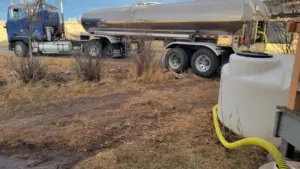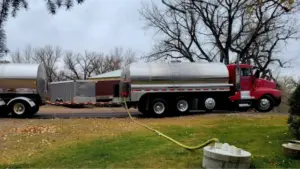
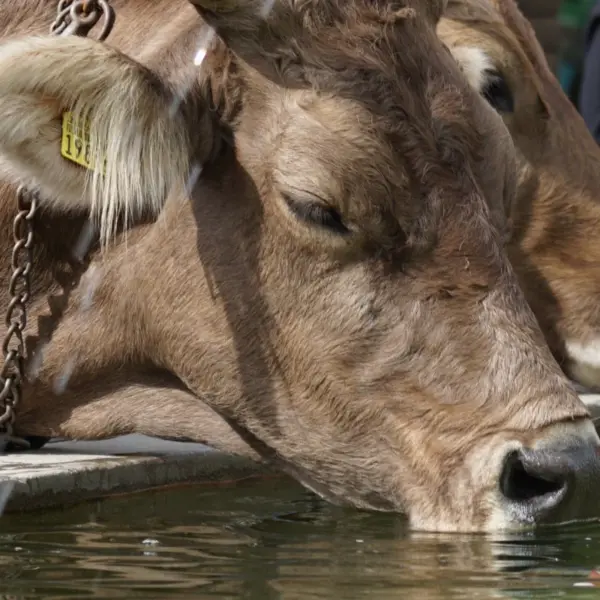
Ask ten ranchers how much water their cattle need per day, and you’ll likely get ten different answers. That’s not evasiveness — it’s accuracy. Daily water needs shift with weather, herd composition, and time of year, which is exactly why so many ranchers plan around water delivery for cattle instead of trying to nail down a single fixed number.
Why There's No One Answer
Cattle water demand isn’t static. It moves with conditions on the ground, and several factors drive it more than any single average could capture:
- Temperature — hot, dry stretches push water intake up noticeably compared to cooler weather.
- Herd size and composition — a larger herd, or one with more lactating cows, draws more water overall than a smaller or leaner herd.
- Feed type — dry forage typically drives more water consumption than lush, high-moisture pasture.
- Activity and grazing distance — cattle that travel farther between grazing and water sources have different demand patterns than those with water close at hand.
Why Guessing Is Risky
Underestimating cattle water needs during a hot, dry stretch can mean stock tanks running dry at the worst possible time. Overestimating means paying for more delivery than necessary. Because demand shifts throughout the season, the safest approach is tracking your herd’s actual draw on your tanks rather than relying on a rule of thumb that may not fit your specific operation, herd, or conditions.
Building a Reliable Water Plan Around Actual Demand
- Monitor tank levels regularly, especially during hot stretches, rather than assuming last month’s pattern still holds.
- Adjust delivery frequency seasonally — summer heat and dry forage both tend to increase demand.
- Use measured deliveries so you know exactly how much water you’re adding to your supply, which makes it easier to track your herd’s real consumption over time.
- Build in a buffer during the driest, hottest parts of the year when natural sources are also under the most strain.
How Herd Composition Changes the Calculation
Not every animal in a herd draws water the same way. Lactating cows generally need more water than dry cows. Younger stock and mature cattle can also differ in their intake patterns. Ranchers with mixed herds — cow-calf pairs alongside yearlings, for instance — often see less predictable total demand than an operation with a more uniform herd. That variability is one more reason a flexible, adjustable delivery schedule tends to serve ranchers better than trying to lock in a fixed volume months in advance.
Tracking Demand Without Overcomplicating It
Ranchers don’t need a complicated system to stay ahead of cattle water needs. Checking tank levels on a consistent basis, noting how quickly a delivered load gets drawn down, and paying closer attention during hot, dry stretches covers most of what’s needed. The goal isn’t a precise daily number — it’s a working sense of your operation’s pattern, adjusted as the season and herd change.
Why Digital Metering Helps Ranchers Track Demand
High Plains H2O digitally meters every load delivered, giving ranchers an exact, measured amount rather than a rough estimate. That precision makes it easier to understand how quickly your herd is drawing down a delivered supply, which in turn makes planning your next delivery — and your overall water budget — far more accurate than guessing.
Coordinating Delivery With Grazing Rotation
Ranchers who rotate herds across different pastures often deal with water needs that move around the property throughout the season. A tank near this year’s grazing area might need more frequent attention than one near a pasture that’s resting. Working with a delivery provider who understands that ranch operations aren’t static, and who can adjust which tanks get priority as grazing patterns shift, makes the whole system easier to manage than treating every tank identically year-round.
Talking to Your Delivery Provider Like a Partner
The ranchers who get the most out of water delivery tend to treat the relationship as ongoing rather than transactional — sharing what they’re noticing about herd behavior, tank draw-down, or upcoming grazing moves so the delivery schedule can adjust alongside the operation. High Plains H2O’s approach is built around that kind of responsiveness, adjusting to what a specific ranch actually needs rather than applying the same fixed schedule to every customer regardless of herd size or season.
The Bottom Line for Ranchers
There’s no shortcut to a single daily number that fits every herd, but there’s also no need for one. What matters more is a delivery relationship flexible enough to keep up with however your specific operation’s water needs shift — by season, by herd composition, and by whatever a given Montana summer decides to throw at your usual sources.
Dependable Water Delivery for Cattle Operations
High Plains H2O provides non-potable water delivery for livestock and ranching operations throughout Great Falls, Ulm, Sun River, Cascade, Black Eagle, Fort Shaw, Floweree, Belt, and Fairfield. With flexible scheduling — weekly, bi-weekly, monthly, or one-time — and over 37 years of trucking industry experience, ranchers get a dependable backup regardless of how demand shifts through the season.
Keep Your Herd's Water Supply Steady
Rather than guessing at daily cattle water needs, build a plan around measured, reliable delivery. Call High Plains H2O at (406) 880-9415 or visit our non-potable water delivery page to talk through your operation’s needs.
Frequently Asked Questions
Yes. Hot, dry conditions and dry forage both tend to increase water intake noticeably compared to cooler, wetter stretches.
Yes. Delivery frequency can be adjusted as needed, with weekly, bi-weekly, monthly, or one-time scheduling available.
Knowing the exact amount delivered each time makes it easier to track how fast your herd is drawing down supply and plan your next delivery accordingly.